I hate empty space. Fortunately, this helps my writing process more than it harms it.
When I see emptiness, I feel the need to fill it. If there is a room with too much empty floor, I want to get more furniture. If the table is empty, I get urges to clutter it up with books and papers. When I clean, I move the clutter, wash the dirt away, and put the clutter back.
My disdain for space is one reason why painting or drawing has never worked for me. Last summer, I went to a bachelorette party at a paint bar in Arlington, MA. We were painting a hill in Boston with the skyline in the background. I closely followed directions for the sky and hill, but replaced the buildings with mountains, because I hate cities. Even though they are lacking empty spaces, they are filled with the wrong things.
If I had just followed directions after that, put in the prescribed three trees and small clumps of flowers, I would have been fine. But I felt like the foreground was too empty. So I kept adding more trees and flowers until the whole front was just utterly cluttered with my doodles. What could have a been a clean painting of a park overlooking a mountain range morphed into a chaotic jumble of rotten broccoli-trees, dotty flowers and distorted, oversized lupines.
Most of the time, my compulsion to fill space is an asset to my writing process. It means I seldom get writers block because if I see the blank page in front of me, I need to fill it with whatever stories or ideas are wrecking havoc in my head. What I write isn’t always good, but I keep going through the crappy parts of my mind until get back to better writing and sometimes, some of the crap turns out to be salvageable with significant revision and editing.
What often worries me with this compulsion is that I may add too much to a story later when I should be cutting back. I’m not worried that I will write too much initially. I don’t think that is possible. The more I write, the more I know about the character. What worries me is revision. Will I make the story drag on too long? Add scenes and characters that weren’t needed? Somewhere along the line, I will come to a point where I need to stop revising a story. Period. But how do I know when I’ve reached that point?
Right now, my answer is when that particular piece gets published. However, for the ones that don’t, I occasionally find myself worrying if draft seven might have been better than draft eight.
Maybe as more of my work gets published, I’ll get a better sense of what “done” means to me. On the other hand, I may have to concede that the concept of “done” just doesn’t apply to writing.
One was a form rejection from the Drabblecast for a flash piece called “The Largest Looser.” I just shrugged it off and started thinking about where to send it next. The flash story is hardly a month old been only been submitted to four places. I have plenty of other paying markets left to send it to.
The second was a rather encouraging personal rejection from Fantasy and Science Fiction for a piece titled “Berserker.” In fact, when I saw the words “The opening scene of this grabbed me and it held my attention to the end, and I think it’s an interesting premise,” I actual thought it was going to be an acceptance. Then came the dreaded “but” followed by a pretty justified reason for turning the story down. Fortunately, I think this is something another revision can fix, so maybe, the next time I submit it somewhere, it will get accepted.
I don’t revise every story after every rejection. Sometimes, a story gets rejected simply because it just doesn’t line up with what the editor wants to put in his or her issue. Sometimes it just isn’t the editors style. Writing is subjective. Different people like different kinds of stories. Editors are people. Just because one or two don’t like a story doesn’t mean its bad. However, when I get personal rejection from a well respected editor that compliments the story then makes a few suggestions, I certainly am going to revisit the story and give his suggestions some serious thoughts.
Fortunately, God, The Universe, and/or my own Hard Work softened the blow of waking up to a double rejection. My article, “Slow and Steady?” was published on Women On Writing’s The Muffin. The piece is a reflection on how an inpatient personality like mine can be both a gift and a curse when writing and publishing short fiction. Right now, the sprinter in me wants to resubmit both these stories without revising. While I might do that with the flash piece rejected by Drabblecast, My gut tells me its better to revise the longer piece rejected by Fantasy and Science Fiction. That piece has gotten a lot more rejections, and the number of pro-paying markets I can send it to is shrinking.
While Fantasy and Science Fiction is now another place I won’t be able to publish, I feel like I am starting to get a better sense of what they look for in a story. Sooner or later, there won’t be a dreaded “but” and “I’m going to pass on this one.” Until then, I’ll just keep swimming.
Life through the lens of a Petri dish: love sacrificed for knowledge. After twenty years searching for truths too small for the naked eye, suffering in my lab, driven mad by failed experiments and failed relationships, I found the answer.
Hours later, I read Studies in Pathology and discovered a twenty-something post-doc discovered it last June and published it today.
She gets the glory, and I get an empty apartment filled with dust and loneliness. She gets a card congratulating her. I get revenge as yellow bubbles grow inside her brain.
“I’ve spent like, a total of 12 hours on this essay and my instructor wants me to revise it again! This is the third draft! It has to be good!”
-anonymous student
Four Lessons About the Writing Process I Didn’t Believe Until I Started Teaching
By Sara Codair
As a professional tutor working in a busy community college writing center, I often find myself repeating the same bits of advice to students over and over again. However, even as I am telling students “be specific” and “don’t procrastinate,” I am wondering if I follow my own advice when writing fiction.
After some careful, end of the semester reflection, I not only realized that the writing advice I doll is applicable to fiction writing, but also that many of those insights emerged from my experience working with students, not the workshops, MOOC’s and traditional classes I’ve been taking since middle school
1. You have to start somewhere
Many developing writers stare at blank screens for hours wondering how to begin. They type the first line, delete it, type it again, delete it, and repeat this process all night then show up to class the next day with nothing.
There is one student I worked with regularly throughout the fall semester. His process is something like this: Write a paragraph, ask the tutor if it is good. Write another paragraph, ask the tutor if it is good, repeat.
Others like to free write stream of consciousness style, make a few changes and turn their paper in, think it’s gold then turn it in.
The ones who get A’s are somewhere in the middle. The do the stream of conscious free write, then revise like crazy before letting someone else look at their essay. They get feedback from their peers and from a tutor, then turn the essay in.
Don’t let anxiety stop you from writing, but also make sure you revise before you let your friends and critique partners read it and revise more before you send anything out to publications.
2. Time is your friend. Procrastination is your enemy.
There are two common breeds of college student: the ones who wait until the night before (or morning before) the paper is due to start, and the ones who start it the minute it is assigned.While those who start early always write better than the procrastinators, starting early doesn’t guarantee an A, or in my case, publication.
My novel is on its 8th draft, and I’m still not happy with it.
I revised “Above the Influence” close ten times before submitting to Mash and getting shortlisted. Even then, my feedback report revealed the judges still found problems. Of course, that doesn’t mean it’s terrible, just that I may have needed 11th or 12th draft in order to have a winning story.
Revision takes time. You have to write the story. You have to let it rest. You have to revise. Let it rest again. Repeat. If you put off starting the story, or wait until a few minutes before a deadline, then you are not going to get a good draft.And even if you do all this, it still might not be good enough. Or maybe it might be good to you and your critique group, but not so good to the slush goddesses, because after all, writing is subjective. What works for one person may not work so well for someone else.
3. Your story is yours. Don’t write what you think people want you to say. Write what you want to say
One mistake I have seen students make over and over again is just writing what they think the teacher wants to hear. I get it – they want a good grade – but it doesn’t work.
Fiction writers do this too. They wonder if their story is marketable, and make the mistake of writing what they think their readers want. Let’s face it, we all want to get published and make money, but if we just write what we think other’s want and don’t stay true to ourselves, our craft will turn into our crap, almost literally, if you really think about it: consume suggestions, digest them, excrete them.
Your story should be your baby, not your shit.
A story I wrote called Costume Connection got six rejections before getting accepted by Centum Press. Two of those rejections came with feedback. The first feedback report had some rather helpful suggestions that helped the piece grow into the version that got accepted. The second had some comments that just didn’t make sense to me. I decided that the piece just didn’t work for those people, and I wasn’t going to change it because of them. I’m glad I trusted my gut, and am looking forward to seeing a story of mine published in a tangible print book
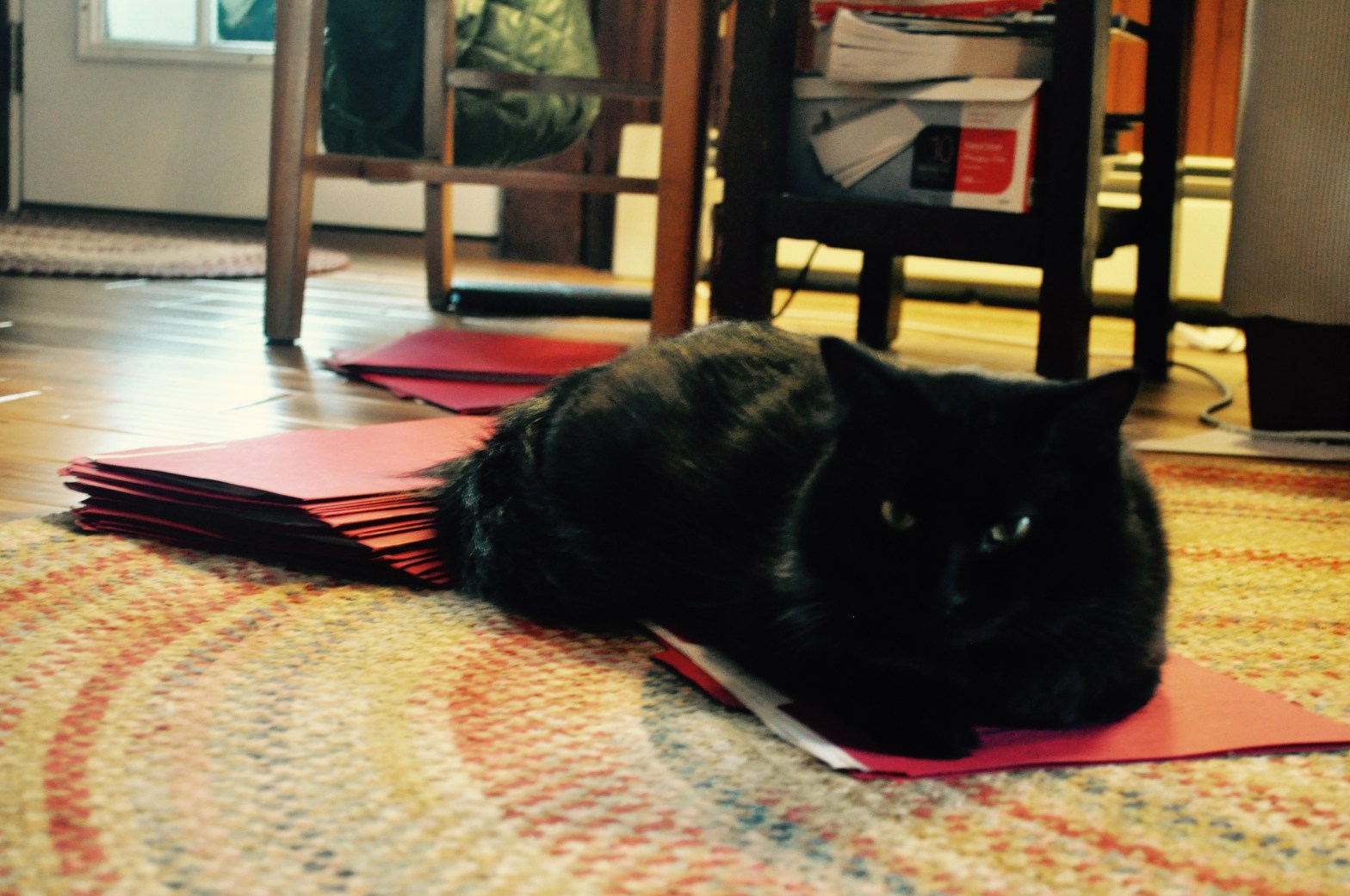
Stories need naps, just like kittens.
4. Let it rest, leave time to proof read, let it rest, cut clutter, let it rest.
Your draft is detailed and specific. You’ve revised several times. You are happy with the content and think you have caught most of the grammatical errors. Other people have read it, possibly more than once and most importantly, you are happy with the result.
You are note done.
You are note done.
Put it away.
Hide the file.
Just don’t look at for at least 24 hours. Try to leave it alone for a week if you can.
When you just can’t stay away from the thing any longer, that means it is time to edit and revise. Catch all those grammatical errors. Make sure you are showing, not telling. Restructure your sentences so you have minimal glue(words that don’t carry meaning). Replace as many adverb/verb pairs as you can with specific verbs . You don’t have to get rid of them all, but just remember a strong verb kicks ass.
Leave it alone for a few days. AGAIN.
Read it with a fresh eye. Make any changes you think of whether they are on the sentence level or the story level. Let it rest again. Revise again.
Whenever I talk to teachers who aren’t writers or English teachers, they seem to be under the impression that college students can’t write. This isn’t because the students can’t compose good essays. It’s because they don’t have time to let the draft rest. When they get a paper back they haven’t seen in a week, they could revise without seeing half of the instructor’s comments.
Even a night of rest would have made the difference between an B and A. There have been plenty of times when I have sat down in the writing center with a more who printed the paper out at night, and brought it to me in the morning, a couple hours before it is due. As we are reading through the paper, the student see’s all the sentence level errors she missed when she did her 2 a.m. proof read.
###
While different genres of writing follow different rules and styles, the process is more or less the same whether you are writing a college research paper, an article or a short story. Once you understand the style and structure of your genre(s), you can continue to improve your writing by studying and improving your process. Be mindful of what you do. Practice metacognition. Journal about your process. Read what other writers have written about heir process and compare it to what you have written about your own. Revise the process accordingly. Write on!
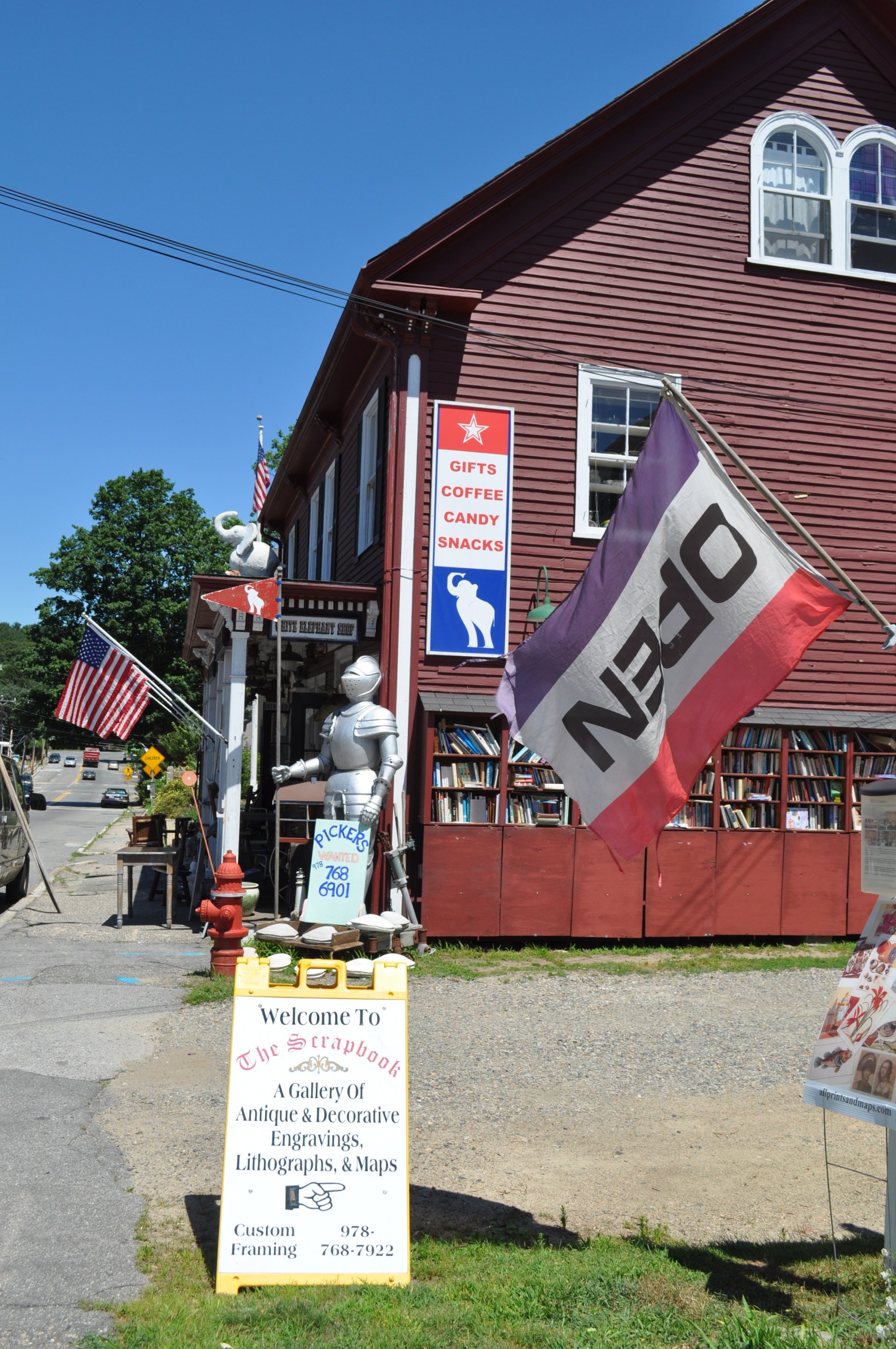
My mom is an antique dealer, and has been since I was about three years old. She choose that line of work so she could have a flexible work schedule that allowed her to earn money without taking too much time away from me. She was always able to pick me up from school and be the mom that drove my friends and me everywhere, and in the summer, I went to work with her.
We would spend our Saturday mornings trolling from one yard-sale to another, searching for treasures that she could make a profit on. During the week, we would antique all over the five New England states. When she started, she sold in a publication called the Antique Trader. That allowed her to sell things nationally for higher prices than someone could get in a store, and by the time I was in elementary school, Ebay made her work much more profitable. Now, she could take a piece that sold for $20 in a New Hampshire shop, and sell it to someone in California, Japan or Germany for $200.
I never fully embraced the business myself, but it left me with a keen eye for undervalued items.
I can usually tell when one person’s trash would be treasure to someone else, and I can spot connections between her success as an antique dealer and my journey as an emerging writer.
Persistence and faith pay off.
My mother has always been a devout catholic, and persistent when it comes to supporting her family. We were never rich, but I never went without. Whenever money got tight, my mom would keep searching through shops until she found something that she could sell to pay the bills. Even now, with me out of the house and my dad on the verge of retirement, she is still going strong. This week, she was getting overwhelmed with vet bills and expensive car repairs. Just when she thought she wasn’t going to be able to pay everything off, she found and purchased an Elvis Presley dress for $10. She put it on Ebay, expecting it to sell for a couple hundred. When the auction ended, the high bid was over $2,000, which was more than enough to cover the veterinary and mechanical bills.
When it comes to my writing, the rejections can be overwhelming. No matter how tough it gets, I have to keep swimming against the tide. I keep revising and submitting, believing that eventually, something will get accepted. Last week, I was starting to get down and doubt myself. I thought if I saw another “Thank you for submitting ___. Unfortunately…” I was going to chuck whatever device I was reading on across the room. While I was out to eat with my mom and a friend, I took a trip to the restroom. While I was waiting in line, I refreshed my email on my phone. There was a response from Women On Writing in my inbox, telling me my story had made the top ten in their contest. This means the story will definitely get published, and I will get paid for it. I still don’t know if I am a runner up who is getting a $25 amazon card, or one of the top three who gets a cash prize. Either way, it will be the most money I have gotten for a story so far.
No matter what happens, I need to keep going and believe that things will fall into place, sooner or later. Faith is important whether it is in a higher power, numbers, or both.
Just because several people reject something, doesn’t mean there isn’t someone out there who wants it.
The glasses sat on Etsy for months. They sold in a few hours at Todd Farm.
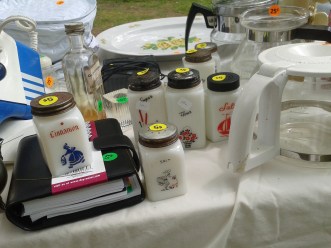
This morning, I met my parents at a local flea market called Todd Farm. We filled our shared table with items that had languished on internet markets like Etsy and Ebay without selling, no matter how low we dropped the price. It was refreshing to see the items fly off the table, especially when the customers didn’t even try to haggle. By the time the unseasonable cold winds drove me from the field, my boxes were nearly empty and my wallet was full of cash.
It reminded me of how my favorite authors got dozens of rejections, in some cases, more than 100 rejections, before having their books become bestsellers, and how some short stories get accepted to pro markets after being rejected by dozens of other publications. I have some stories nearing ten rejections, but my experiences with the flea market renew my hope that sooner or later, they will sell.
Writing and antiquing aren’t all that different. They both deal in stories. They both deal with rejections. They both offer rewards for those who are persistent enough to withstand the rejections and just keep searching for the next Kodak moment.
“I keep getting worse,” I say looking down at the black veins creeping towards my heart.
“You should not have let the demon bite you,” replies Raquel. Her dark eyes show no sympathy.
“Was I supposed to just let it eat that kid?”
She shrugs. “The ‘kid’ is a mortal.”
“He’s only ten. He might have 90 years ahead of him.”
“Nine decades pass in the blink of an eye. We endure when we are smart. Your decision was not smart. You gave up eternity to allow a mere mortal a few pathetic decades. For all you know, he will get hit by a bus on his way home and perish in spite of you sacrifice.” Raquel picks of her bag and walks away.
I sit down on a tree stump, watching her body move with serpentine grace. However, even a being as cold as she cannot hide all emotion. Her fingers quiver, and her heels dig deep into the earth.
#
As the sun goes down, the woods come alive. Owls hoot and hunt, competing with the bobcats and foxes for the small mice and voles scurrying across the forest floor.
The poison continues to rise in me, turning my veins to black rock. It doesn’t hurt. In fact, I can’t feel much at all.
“This will be a good death,” I say to the critters.
It’s not right to endure forever. Here, my body will fade back to earth, feeding the never-ending cycle of life and death. I have no regret about my decision to save the boy.
The crickets are singing by the time my chest goes numb and my heart stops beating. I’m prepared to cease when pain tears through my back. A blinding light consumes me as wings sprout from my spine.
When I decide to write a flash story after spending the day grading papers, I end up writing stories inspired by cat toys. “Flying mouse-squirrel-bird Thing” is one of those. My cat has this crinkly, furry toy that is flattened like a flying squirrel but with the face and coloring of a mouse. It has strings dangling of off its arms with bird feathers. Combine that with a Cracked Flash prompt and you get something like this*:
Flying Mouse-Squirrel-Bird Thing
by Sara Codair
“The princess claims it was the dumbest assassin she’d ever seen, but I find it quite brilliant,” said Marcy.
Her face was like a stone with a small frown etched into it. She glowered at the corpse of a flattened gray rodent, which was covered with both fur and feathers. It had the body of a flying squirrel but the head of the mouse.I had no clue how she had managed to look so serious. When I saw the flying mouse-squirrel-bird thing dive bomb the princess, I just double over laughing so hard I pissed my pants.
“And you are the dumbest bodyguard,” she continued. “It may have looked ridiculous, but its claws were sharp enough to pierce through skin and puncture an artery. Thankfully, it was dumber than you.”
I wanted to respond with something witty, but I could hardly breathe, let alone speak. Of course, Marcy hadn’t even cracked a smile. While I was laughing, she gallantly tacked the princess out of the thing’s way and crushed the doomed creature under her black combat boot.
“Gather your wits. We have an investigation to conduct!”
When I failed to gather my wits, Marcy’s steel-toed boot slammed into my gut. Now I had a more serious reason to gasp for air. She glared while I forced my oxygen deprived body into standing position.
“Alright, I admit it, I screwed up.” I finally managed a few steady breaths. “It’s pretty obvious who is behind this. The Gene Guild was furious when the Princess refused to remove the ban on cloning.”
“But we can’t prosecute a whole organization. It could have been one member acting alone.” Marcy’s eyebrows twitched on her outcrop of a forehead, eventually meeting over her nose.
I stared at the now flattened genetic mashup. “That really was the dumbest assassin. He left his name on the murder weapon.”
“Indeed, it appears he did.” A true smile cracked across Marcy’s boulder-like face as she stared at the initials branded onto the creatures ruptured gut. “I guess we’ll be paying Dr. Horrible a visit.”
Grimacing, I prayed I didn’t die laughing in the mad scientist’s lab.
Marcy rolled her eyes and walked towards our steeds while I chucked in her wake. This certainly was the most interesting case I’d work on in my three month stint in the princess’ secret service.
The End…or To be continued?
This seems to end a scene, not a whole story. Perhaps I will return it it one day soon.
*I will note that I made some revisions to this based on the comments I received from one of the Cracked Flash judges, Si.
They are short, written in clear, concise language and full of pretty pictures to keep the reader engaged. They are also laden with advertisements about diets that flaunt images of skinny, clear skinned woman drinking tea that is practically glowing.
It’s only been a few years since Diamond had to suffer through First Year Writing courses at the community college she studied at, so she hasn’t forgotten her English teacher’s warnings about internet sources. The advertisements mean that the site is out to make money. The author isn’t a scientist or doctor, in fact, he only has two more years of college than Diamond does. It leaves her skeptical, so she heads down to her alma mater’s library to try and find more credible sources.
The librarians don’t look as friendly as she hoped, so after a few minutes wandering in the stacks, she finds herself on the computer, skimming through databases. The first article that “Green tea and health benefits” gives her is “Emerging evidence for teabenefits.” The title seems to be exactly what she was looking for, so she clicks on it and downloads the article. The first two sentences seem to be written in plain English, but then she comes to this: “The mechanism may relate to bioactive compounds found in tea, which exert anti-arteriosclerotic, anti-oxidative and anti-inflammatory effects.” She is persistent, reads it a few times, looks up “arteriosclerotic” and presses on. Sentences like “For weight management, modest, positive effects were found for green tea when ingested by overweight/obese adults, possibly related to thermogenic effects,” make sense, mostly, but she doesn’t know what to do with things like “As shown in Figure 1, green and white teas are not oxidised, thus contain large amounts of polyphenols, also known as catechins, which include (–)–epicatechin (E), (–)–epigallocatechin (EGC), (–)–epicatechin- 3-gallate (ECG) and (–)–epigallocatechin-3-gallate (EGCG). A typical cup of green tea (2 g leaves and 200 ml water) contains 240–320 mg catechins, with EGCG providing 30–50% of that amount (Grove & Lambert 2009; Oliveira et al. 2013),” and “In terms of mechanisms of action, animal studies indicate that green tea extract (at doses of 50 mg/kg) may reverse endothelial dysfunction (Minatti et al. 2012) with the catechin EGCG being associated with reduced hyperplasia in the intima region of the carotid artery (Orozco-Sevilla et al. 2013).”
She skims the article enough to know that researchers did find evidence of at least some of the things mentioned in the internet articles. However, if she read carefully, she would see that scholars are reviewing studies are done by other people. There are a lot of words like “indicate” and “may” in the article, showing that while the studies are promising, they are not exactly definitive. They are starting to come together, but haven’t fully proven the benefits to the scientific community. On the other hand, the list articles are more definitive, proclaiming the health benefits as undisputed truth. She files that away in her head, and applies a little more skepticism the next time she reads online health articles.
The problem is, not everyone has a college education, and a good portion of the ones that do forget everything they learned about reading and writing classes as soon as they get that degree in hand. A less dedicated reader might have lost interest at the third sentence of the academic article if he or she even found it at all. A less dedicated reader would have just read things published on websites like Buzz Feed, or for a more credible source, the New York Times.
However, even publications known for their journalistic integrity are not the best sources for scientific information. They are business, after all, and they need to make money, which is especially hard when they are competing with the masses of free content available online. As a result, the public gets filtered and watered down versions from money making news outlets like the Atlantic or New York Times who spin the information to attract readers. We don’t need big brother telling us what we can or cannot read. Researchers and scholars do that for him by coveting their status and keeping the masses out of their smart people club.
Scholarly academic writing is often boring, needlessly complex and inaccessible to the average person. Maybe those who are not part of academia don’t care about knowing the details every study ever done. That is okay. However, one should be able to get the results and implications in a clear and accurate manner. Perhaps if academics wrote more engaging prose, more people would be willing to be read them, resulting in a more educated public.
The first hurdle faced by a person who his unaffiliated with an academic institution is access. Scholarly articles are not free online. Academic journals are more expensive than popular publications. So you either have to pay astronomical subscription fees or be affiliated with an intuition that pays those fees if you want to even see the article. Now, as a writer and adjunct, I can understand why the articles aren’t free. However, $75 is a steep subscription fee for a journal that only publishes three times a year. That’s what it would cost for someone who is not a student or NCTE member to subscribe to CCC or a similar publication. Science journals, which might be more relevant to the average person than articles about teaching writing, can cost even more. It isn’t easy to get information directly from the source, and that is a problem.
Do you remember playing telephone in elementary school? Did the sentence ever stay the same as it moved through the classroom? It never did in my experience. I find it terrifying when I realize that scientist and the media are playing a game of virtual telephone with information. In 2012, neuroscientist Molly Crocket gave a ted talk about how science in her field is misrepresented by the media. “Beware the Neurobunk” documents the journey of information as it transforms from facts to headlines.
What started out as study involving a nasty tasting drink containing a chemical called “tryptophan” morphed into headlines about how cheese and chocolate make people smarter, simply because they also contain that chemical. She gave several other examples of studies that have been misinterpret by the media. I could summarize more if it, but if you are interested, you should really just go watch the ted talk.
Essentially, it proves the public isn’t as educated or informed as they could be. Why? Why do academics need to love in a little elitist bubble? Yes, they do need to publish the professional lab reports for the peers, but why can’t they also publish a shorter version themselves that boils down the methods and limitations and focuses more on discussing the results and implications?
When journalist and bloggers act as middlemen, the integrity of the work is diminished. If the short versions were written by the scientist themselves, instead of a network of people playing telephone, the information is sure to me accurate, and less manipulated. And perhaps if researchers made more of their findings accessible to the public, they would get more support for the research. Imagine being able to get funding directly from the people – supplementing hard to come by grants from the government and corporations with money with crowd funding? Researcher wouldn’t be led by the whims corporations, the government and members of the 1% who seek to control what we know; it would be controlled by the people. It would make academia and the good work its people do more democratic.
Please feel free to continue the conversation in the comments. I’d love to hear what you think about this issue one way or another. Feel free to challenge me if you think I am wrong.
I still have a lot of grading to do before the semester is truly over, but today marks the last day of my regular teaching schedule for Spring 2016. So I’m taking a little break to write and poke around the garden before I dive into the grading. Everything is growing so fast!
 If I had just followed directions after that, put in the prescribed three trees and small clumps of flowers, I would have been fine. But I felt like the foreground was too empty. So I kept adding more trees and flowers until the whole front was just utterly cluttered with my doodles. What could have a been a clean painting of a park overlooking a mountain range morphed into a chaotic jumble of rotten broccoli-trees, dotty flowers and distorted, oversized lupines.
 1. You have to start somewhere

 During the week, we would antique all over the five New England states. When she started, she sold in a publication called the Antique Trader. That allowed her to sell things nationally for higher prices than someone could get in a store, and by the time I was in elementary school, Ebay made her work much more profitable. Now, she could take a piece that sold for $20 in a New Hampshire shop, and sell it to someone in California, Japan or Germany for $200.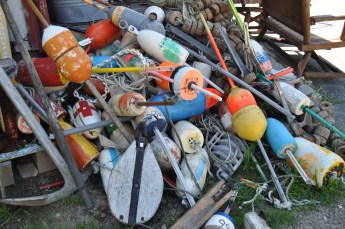







 Sara Codair