A Fun Run for the Developing Writer’s Brain

Creative Writing exercises are my favorite thing to do in class. However, I used to think there wasn’t room for them in a first year writing class. I couldn’t have been more wrong. Teaching any kind of writing without creative exercises is like a coach who doesn’t encourage his or her athletes to run or weight train.

Whether you are training to improve you skills at soccer, crew, or baseball, running is one way to progress. Or, if like me, you are not a fan or competitive sports, you can run to make your body stronger and healthier. I run because it eases my anxiety and keeps the copious amounts of cookies I consume from sticking to my hips. One could say the same thing for pushups, crunches and weight training. They improve your body so you can use it more effectively.DSC_0394

Creative Writing exercises are like running or doing push ups. They strengthen the brain and its ability to translate thoughts into words. It doesn’t matter if a person’s goal is to write copy for a website, a lab report, a short story or a persuasive essay. Doing writing exercises on a regular bases will strengthen the parts of his or her brain that translate ideas into sentences and paragraphs.

This is a realization four years in the making for me. When I first started teaching English Composition or College Writing, I thought that since my goal was to teach academic writing, I had to use traditional academic methods. At the time, I believed that mean brief lectures about essay structure followed by discussions on nonfiction texts.

There is nothing wrong with having students read and discuss texts that follow a similar style to the ones they plan to write. However, a college writing class can be much more than that. Boredom, Breadloaf and a slew of academic articles have convinced me that I can and should teach creative writing in a class where the end goal is an academic research paper.

It shows the students that writing can be fun while enhancing their ability to efficiently translate their thoughts to the written word, it facilitates skill transfer proves to the students that they have something to say and that it doesn’t take too long for the first draft of that idea to be born on the page.

One of my favorite creative exercises to do with my students is the never-ending story. Here are the directions I give my students:

  • Take out a blank piece of paper.
  • In a few minutes, I am going to play a song. When the music starts, you are going to start a story. The story can start with a character, a description, action or some combination of all three as long as it is inspired by the music.
  • When the music stops, pass you paper to the right.
  • Read what is on the paper that was passed to you.
  • When a new song plays, continue that story. However, you should let the music inspire how you continue it.
  • We will repeat this process eight times.

I play a variety of songs, ranging from Lindsey Sterling’s Crystalize to Drake’s Hotline Bling. A large variety in genre and style will wield hilarious stories and an interesting discussion about what kind of music facilitates writing and what kind interferes with it down.

The reflection and discussion that follows can’t be skipped. This is where students realize the activity was more than just a way to destress at the end of the semester. If you can get them to name the skills or strategies they used when composing on the spot, they can put those aside as tools for when they get stuck on an assignment. If the students get can make a connection between the kind thinking they did during this process to the  kind of thinking they did when doing other kinds of writing, they will begin to understand that skills do transfer from one genre to the other (something some academics think doesn’t happen in first year writing classes).

On the surface, the never ending story and other creative writing exercises may just seem like “fun” ways to fill time in class. However, they are actually valuable strategies for encouraging metacognition, skill transfer and team work.  They encourage students to think quick, reflect on how music or sounds affect their writing and asks them to participate in a non-verbal collaboration. They focus more on the process than the end product. Most importantly, the have fun while they are learning something.


 

Musings on Mash

Waking up to see my work published on a high traffic website always puts me in a good mood. Today, my article,  “Sew Your Story,” was featured on the Mash Blog.

This was particularly meaningful for me because Mash Stories has been an important part of my development as a writer.

Last summer, someone in my writing group asked for feedback on a story she planned to submit to Mash. After being inspired by her story, I paid a visit to Mashstories.com. Writing a story using three key words seemed like a fun challenge, so I  tried it. The words “Congress, Art, and Jealousy” were the inspiration for the first flash story I ever wrote. It wasn’t very good, and got rejected, but it taught me something important – I could finish something.

I had been writing all my life, but seldom finished what I started. I had two very rough drafts of different novels and dozens of beginnings, scenes and vignettes with no end in sight and half developed plots. Writing flash fiction taught me that not only could I write a story through to its end, but I could also revise it and edit until it was a polished piece.

I kept working on craft. I picked one of my novel drafts and focused on revising it. That is where I got the idea for the sewing metaphor discussed in”Sew Your Story.

When I was taking breaks from the novel, I worked on short stories. Some of them were flash, but eventually, I did work my way up to longer shorts.

On my third Mash competition (Halloween, Missile, Common) , my entry, “Above the Influence,” got short-listed.  This was my first fiction publication. Mash had taught me a second lesson. Not only could I finish and polish a story, but I could also do it well enough to published, to be be one of the top twenty-ish stories in a competition with hundreds of entries.

Around the time I got shortlisted, Mash had started a “Mash Club.” Joining cost money (regular submissions were free) but members received detailed feedback, quicker responses and were allowed multiple submissions. I had a lot of ideas for they key words and loved feedback, so I joined.

The next five stories I sent mash (two in that competition and three in the following quarter) got rejected. However, each rejection was followed by two or three pages of extremely detailed feedback from multiple judges. I used that feedback to revise each rejected story, and then I would send it out to another market.

This week, I found out one of those stories was accepted for publication in an anthology that Centum Press plans to publish this summer.  This will be my first piece of fiction to appear in a printed book.

So thank you, Mash stories, for giving me the inspiration, confidence and guidance to dive into the world of flash fiction. And thank you to the writing group members who introduced to Mash, encouraged me to write flash fiction and read/critiqued the rough versions of my stories. You know who you are.

Waking the Cape

A brief foray into creative non-fiction:

Waking the Cape

By Sara Codair

The smell of bacon and low tide permeate the air. I breathe deep, savoring the warm, salty aroma. The early spring air still has a bite to it, but the sun soothes the sting as it warms my skin.

13062270_10100946589105135_2858738909223141983_n
Chapoquoit Beach, Falmouth

Its quiet still – only a few cars out polluting the illusion of pristine air. The music of songbirds and gulls is still the dominant sound. Afternoon winds have yet to stir the ocean, so sparkling sunlight dances across the silky, aquamarine liquid.


I sip my tea, letting the bitterness of over brewed leaves distract me from the displacement I feel. Years ago, I could have called this place home. But home is two hours to the north now, on a lake, in a house that was someone else’s childhood get away. They sold it just like my parents sold the cottage.

DSC_0767.jpg
The Cottage

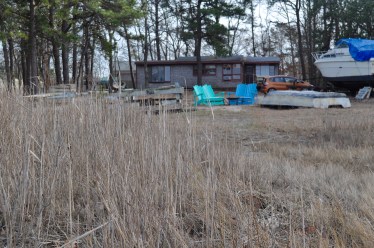
The people who bought the cottage tore it down and replaced it with a monstrous McMansion. It certainly isn’t the worst one on the street, but it is nothing like the little shacks that used to populate Monomoscoy Island.

DSC_0769.jpg
The view from The Cottage

In some ways, my grandfather was unknowing ahead of his time, building with salvaged windows and floors. None of that aesthetic is preserved in the house that stands in its place. Brand new windows, cementitious siding, shiny rocks and pvc trim have replaced the weathered brown shingles, mismatched windows and church floors.


I was kinder to my stolen oasis. Rot forced us to rip out old floors, but the ones we replaced them with were rustic with the same width boards. My husband spent weeks reconstructing the interior of cabinets and walls so we could preserve the old paneling and faces. Sure, we ripped down the white vinyl siding, but we replaced it shingles more like what would have covered the house when it was built in the early 1900’s. Some claim that it would have been easier to tear it down than fix it, but I wanted to preserve the house’s spirit, not break it.

#

DSC_0871
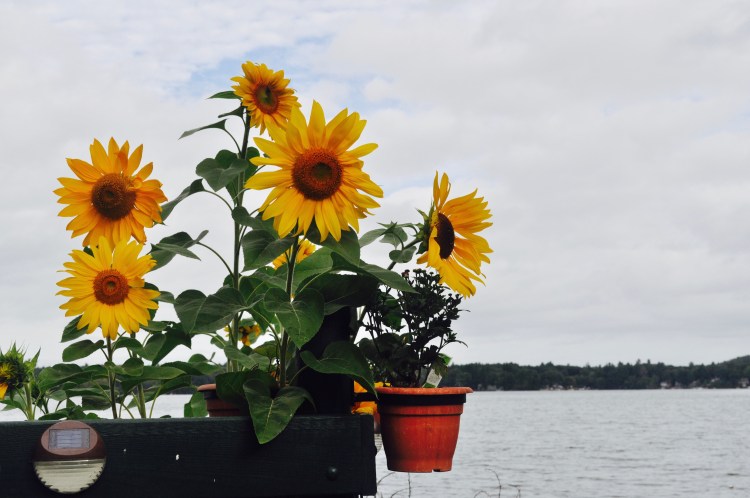
My lake-front yard, summer 2015. The boat at the dock is the one flipped upside down in the above photo.

Later in the afternoon, I’m “home” at the house my husband and I have lived in for two and a half years. I’m on the porch. The only thing we changed in this space is the furniture. It has the same indoor-outdoor mini-golf carpet, the same green and white paint and the same screens.


Small waves lap at the sandy beach out front of the house. Voices and the hum of a few boat engines float across the water, competing with birdsongs for my attention. My cat is perched above a speaker, trying to hunt the black birds, occasionally talking back to them with trills and chirps.

There is no cold bite in the air, just the afternoon sun warming my face. It’s getting lower, bathing the sand and water in gold. I have dirt under my fingernails and sand on my feet. There is no salt in the air, but the grilling meat makes my stomach growl.

It’s not the cape, but its mine. My roots are finally starting to break through the soil, drinking up the soul food only the earth can feed me.

DSC_0985.jpg


Sunlight Filters through the Fog of Rejection

I know rejections are part of being a writer, but when they come in waves, they can be hard to take, especially when I know I gave 110% to a piece.

Getting two stories on nonpaying e-zines boosted my confidence for a while, but the subsequent  slew of rejections from paying markets was starting to erode it. I’ve gotten at least five rejections in the past three days.

I can deal with quick rejections, but the ones that really hurt are the ones that told me I was close. We enjoyed your story, but

  • you didn’t make the final cut
  • You didn’t get enough votes to get into the third and final round of voting
  • I loved x, y and z about it, but have to pass anyways because we have so many submissions

They make me feel like I am wandering around in pea soup fog, within sight of the lighthouse, but unable to find the harbor entrance.

Fortunately, there are flickers of sunlight slipping through the haze of rejection.

Yesterday, I found out I am a finalist for a writing contest I entered in December. Over 200 hundred have been eliminated leaving the judges with 50 to sort through. I’ve been told the top 20 will get prizes(cash or gift cards), and the top ten published.

Today, I returned from work to find ten new emails appeared in my inbox during my 15 minute commute. They were mostly twitter notifications that came around as a result of winning Cracked Flash competition for the second week in a row. I suspect there is some magic in their prompts and time limit that brings out the best in me. I’m always surprised to see what I can do with three hundred words on a Saturday. Even though there is no prize for winning, it is a welcome reminder that someone likes my writing. And that gives me hope that if I keep at it long enough, I will eventually break into the paying markets.

Thank you to the good people that run Cracked Flash.

###

Here is the winning story:

The Phoenix

By Sara Codair

We all knew he was going to set himself on fire, and we were right. Henry and I just never imagined how our son, Dane, would go up in flames.

It happened over summer vacation. The sun was scorching and the black top was so hot you could cook stir fry on it. Dane was angry. The wheels on his favorite skate board had melted. His face was beat red, aching with sunburn. So when Billy Jones tried to steal his Nintendo DS, he just lost and burst into flames.

The medical examiner said it was spontaneous combustion, but he wasn’t there when it happened. He didn’t see his son out on the street raising a fist to punch a kid twice his size, just go up in flames when the sun hit his fist. He didn’t see how quick the body blackened. He didn’t see the naked baby screaming in the ashes – a baby that looked exactly how the burning boy had looked twelve years earlier.

The papers said all that was left of Dane was a charred skeleton. They don’t know about the infant that wakes me every night crying for milk or to get his diaper changed. No one knows save Henry, and no one else can know. Not even my mother.

We’re already packing. Henry has an apartment picked out across the country, and a buddy at work who can hack the system and get baby Dane a fake birth certificate and social security number. I don’t know what Henry told his friend, just that it wasn’t the truth.
Like a phoenix, Dane was reborn from his ashes, starting life anew. So we, too, would start over, in a new town where no one knew our names.

DSC_0175

Making the Space

The space a class is taught in often has a profound impact on the students’ attitude and the ambiance of the classroom’s community. It’s not everything, but it can go a long way. As an adjunct, I have virtually no control over what room my class is taught in, so I’ve learned to make the most of what I have.

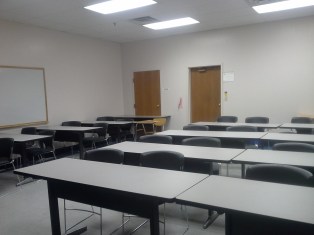
This semester, I have one particularly rowdy group. Their attention is easy to loose and difficult to hold. The classroom we are in has tables that 2 to 4 students can sit at.20160412_161229The tables are lined up so the students all sit facing me. It’s set up for a traditional, lecture style class.

In other places I’ve taught, and even in other buildings of the same school, I’ve had classic college desks, desk/chairs on wheels, and tables on wheels.

The heavy, not moving rows of tables are by far the worst. The students wind up expecting a lecture. They sit with their friends or hide phones under the big tables and cruise through social media all class.

They were okay for the first few weeks of class, but quickly dissolved into random interruptions, side conversations, abuse of phones and chaos.

So by midterm, I got fed up. I knew I needed to make some kind of change. The content I was using in class worked fine with other groups, so I thought I’d try changing the space and structure.

I got to class early and dragged the heavy tables together in the center of the room so it was set up like a conference room instead of a lecture hall.

The students were confused when they came to class, but quickly adapted. They didn’t all get their usual seat by their friends, and even if they did, they couldn’t easily hide their conversation or phones. It wasn’t just me looking at them, but their classmates.

When we started a discussion, instead of asking for volunteers, we just went around the table. Students were allowed to say pass if they weren’t comfortable talking, but few took that option in a majority of the discussions. Eventually, I did allow the discussion to take a more natural form, but by that point, it was much easier to moderate.

While I still noticed a few people texting, no one was having side conversations and the interruptions were minimized. Students were more respectful of each other and of me. They listened and made eye contact with the people who were talking. They stayed on topic (mostly). Everyone who did talk contributed something valuable to the discussion whether it was presenting their research or on strategies for avoiding procrastination.

By making a few adjustments to the layout of the room and structure of discussions, I transformed a the rowdy class that gave me anxiety to one I look forward to teaching again.

Evil English Teacher Alphabet Soup

DSC_0859Evil English Teacher Alphabet Soup

By Sara Codair

Evil English teachers. Grammar Nazis. Every school has them. If you yourself are an teacher, you probably know exactly which of your colleagues cringe at the tiniest of errors, covering their student papers in blood-red ink. Whether you are a teacher or not, it is likely that you encountered one of these people at some point in your life.

This soup was inspired by the teachers who make students so worried about where to put commas that they forget to think, creating essays that are pretty but shallow. This soup is to raise awareness of the teachers who send students away in tears – students who wrote brilliant essays but lost thirty points for misplaced comma’s, improperly conjugated verbs and informal language. This soup like looks like words drowned in red ink. It tastes as beautiful as the writing would have been if that red tide had not drown it before it learned to swim.

Correct grammar is important, but it is not everything. Students who didn’t learn grammar in middle school and students who are not native speakers of English will not master English grammar in one semester. Sure, there may be a handful of students who benefit from the strict, Grammar Nazi style class, but most panic, get too stressed and give up when confronted with that kind of teacher, or they over rely on tutors to help them get through the class while vowing to never speak to that instructor again once the semester is over.

If you worry about grammar on first and second drafts, your ideas won’t be fully developed simply because you cannot devote your full attention to ideas if you are stressing about grammar. Whenever I find myself editing prematurely, I wind up stuck on how to finish a piece or where to take. When I wait until the third or fourth draft, my ideas are fully developed and I can put all my attention to cleaning the piece up and making it beautiful. So why subject students to standards even professional writers cannot hold themselves to? Students don’t have time for the kind of editing we do before publishing something. I’m not saying we shouldn’t teach grammar at all. I’m just saying we shouldn’t drown students with it.

#

Ingredients:

  • 2 tablespoons olive oilDSC_0834
  • Half of a large yellow onion or one small onion
  • Half of a large bell pepper (red, orange or yellow)
  • ¼ lb of ground beef (substitute with extra veggies for a vegetarian option)
  • 2 small carrots or one large carrot
  • 1 stick of celery
  • half a zucchini
  • seven cherry tomatoes (preferably sungolds)
  • a few sprinkles of dried thyme (or fresh equivalent)
  • 1 teaspoon dried basil (or fresh equivalent)
  • 1 teaspoon of dried oregano (or fresh equivalent)DSC_0847
  • ½ can of tomato paste
  • 1 box chicken broth (use vegetable stock for a vegetarian option)
  • ½ cup of alphabet pasta


Step 1: Put two tablespoons of olive oil in a medium or large saucepan.

Step 2: Dice the peppers and onions then add them to the pan. Let begin them cook while you defrost the beef in the microwave.

DSC_0837Step 3: Add the beef to the pan, constantly stirring and breaking up as it cooks. I prefer small pieces of meat, so I will keep chopping with a wooden spatula until it is thoroughly broken up.
DSC_0841
Step 4:
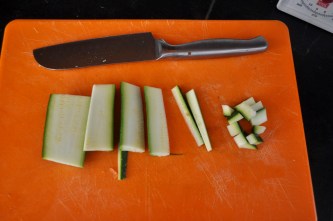
Cut up the carrots, celery and zucchini, adding each as it is ready to cut. For this  soup, I like to the leave the carrots round and cut the zucchini into tiny rectangles. Cut and add the tomatoes once all the other vegetables are in.

DSC_0844Step 5: Measure and add Thyme, Basil and Oregano. I used dried this time around, but prefer to use fresh when it is available.
DSC_0848

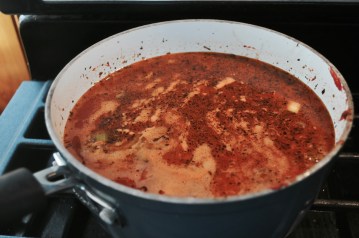
Step 6: Add the tomato paste, stirring until the meat and vegetables are as coated as possible.    

Step 7: Add the chicken broth, stirring until all the past has dissolved and turned the broth red.

DSC_0849

Step 8: Bring the soup to a boil and add the alphabet pasta. Turn the heat down to low and let it simmer for at least one hour before serving. Store leftovers in the refrigerator.

DSC_0853

If you are a teacher, please use your correcting pen cautiously. Focus on one issue at a time. Give mini lessons on grammar before students do a peer review in class. Don’t spill the soup on your papers.

DSC_0857

A Win on Cracked Flash

For the past two months, I have made it part of my weekend routine to participate in the Cracked Flash writing competition. They post a sentence and some inspiration images allowing writers 24 hours to come up with a 300 word story. All entries are posted to the comments. The following Wednesday, a winner and two runner ups are chosen.

This Wednesday, my story, “Her First Rodeo,” won.  

This is my second time winning this competition, and I’m just as excited as I was the first time. In an world so full of rejections, it is refreshing to see somebody appreciated my writing – to see somebody gets me. Cracked flash is a unique competition that I would recommend to any writer.

One thing that sets this apart from other contests is the time limit. 24 hours is not very long. Because I have other projects I’m working on, papers to grade, and occasionally, people to see, I usually only have time for two drafts. One where I write the story and exceed the word count, then another where I cut back and improve the language. Some weeks my stories have flat characters and week plots. Some weeks, they are funny and dynamic. Twice, they have been good enough to win.

Winning does’t mean the stories perfect, and the judges know that. My favorite part of this competition is that their statements about the winners usually point out a few things they liked about the story and one or two ways it could have been better. While I can’t send my 300 word to a lot of publications because simply being on the web means it is “previously published” I could revise it and expand it until it morphs into a new story.

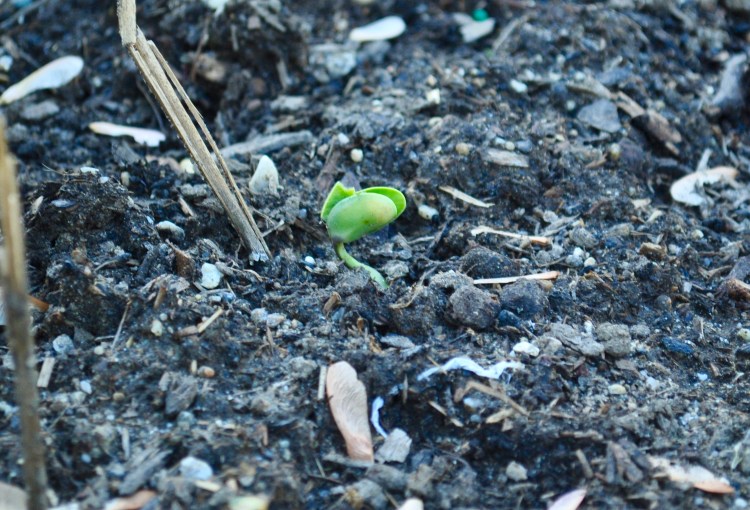
The short might be like a cucumber seedling. It starts out small, but turns into an enormous vine that produces dozens of delicious fruits.

My 300-word story about a sheriff and his apprentice placing a tracker on an outlaw alien might just evolve into a 3,000 word story about those same to characters tracking said alien, apprehending him, and realizing he wasn’t a villain at all but a victim who was framed.

It will take a few months for this seedling to grow into sprawling vine, so please take a few minutes to look at this little green baby and don’t forget to visit Cracked Flash on Saturday for some #writing #inspiration.

Her First Rodeo

By Sara Codair

“It’s a bad plan, but if there’s one thing I’m good at, it’s making bad plans work!” said Joe.

The Cantina was dark place that reeked of stale beer. Horrid country was barely audible over the drunken shouts of ranchers–exactly the kind of place their quarry would hide.

“We’re gonna get killed,” muttered Molly. She was rookie, fresh out of the academy.

“Every man in here is carrying a gun.”

Molly wasn’t wrong about the guns, but Joe was unconcerned. They were a crucial part of his plan. He walked straight to the the counter and order a shot of whisky before shouting, “I’m looking for Greggor Tams. First one to give me intel gets fifty bucks.”

The men froze. Conversation ceased. The automated singer crooned about losing his wife, truck, and hamster while the click of safeties switching off improved the melody.

“We ain’t snitches,” said a man whose face resembled a raisen.

Joe grinned. No face matched his quarry’s, so he examined each gun and hand carefully, focusing on a gleaming silver pistol, held by a blue-tinted hand. Alien magic could create some good illusions, but the flaws always showed closest to objects from their home-worlds, especially laser-pistols.

He knew Molly had spotted it when she fainted.

“I ain’t askin nobody to snitch,” shouted Joe. “Just wanted to see how my apprentice held under pressure.”

“She didn’t hold at all,” laughed raisin face, putting his gun away.

“Next round’s on me.” Joe slipped three bills to the bartender, picked Molly up and carried her to his truck, careful to bump his quarry on the way out and plant a tracking device.

Molly sat up as the pulled onto the road. “I can’t believe that worked. The fainting act is the oldest trick in the book.”

The Impatient Writer’s Chicken Soup

The Impatient Writer’s Chicken Soup: Advice on the Writing Process and a Delicious Recipie

By Sara Codair

Soup and writing have a lot in common. One important connection to note is that they both improve when they are allowed to sit and simmer for ample time. If I eat a soup that hasn’t been sitting long enough, the vegetables will be hard and the flavors won’t have had time to fully permeate the broth. If I don’t let a story rest between drafts, my characters won’t mature, my meaning will be shallow and my language will be flawed.

When I first decided to try and publish my writing, I made the mistake of thinking a story was done too soon. I wasn’t sending first drafts out, but I wasn’t letting the stories rest long enough either. I’d finish a draft and jump right into the second and third. I’d think, Well, I can’t think of anything else to change, read it one more time and think I don’t see any grammatical errors. I’d send the draft out to a publication and a few weeks later, get a rejection.

Before submitting it elsewhere, I would revisit the story. The type-o’s and grammatical errors would leap off the page. I’d cringe at excess words and forced dialogue. I’d gape through plot holes and be left with little or no resolution at the end. I’d feel like my insides were twisting around with regrets and what if’s.

Did they stop reading after the third typo-o?

If I had better dialogue and a stronger plot, would this story have gotten accepted?

I observed the same thing hurting my students, though in their case, it was more procrastination than impatience. They wouldn’t leave themselves enough time to let the story rest, so their final drafts of essays would be riddled with grammatical errors and logical flaws that they caught on their own when given the chance to review the essay in class before turning it in.

I am a very impatient person. I like to know what is going to happen next, and when I know something I want is coming, I want it now. I hate waiting. So even after I realized I needed to let my stories rest, I would have a hard time making myself wait, just like I never wanted to wait for my soup to finish cooking.

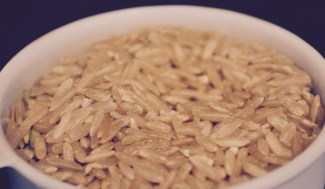
DSC_0823When it came to soup, I realized that rice was the answer to my impatience. If I used pasta, the pasta would be soft enough to eat fifteen minutes after I added it. However, if I used rice, I had to wait at least an hour after I put the rice in if I didn’t want to be constantly crunching on uncooked rice. I cheated a couple times, but learned my lesson after getting a hard grain stuck between my teeth. Furthermore, I could plan the time I cooked the soup so I wasn’t hungry while I was cooking it. Or I could eat a snack while I was waiting for the broth to boil so I wouldn’t be starving as soon as it was edible. This way, by the time I ate it, the flavors would be fully permeated.
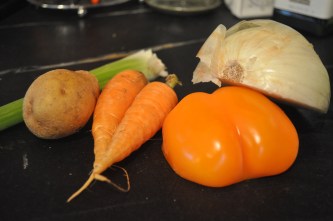

With writing, I use similar strategies. I can send it to a reader who I know will take longer to give me feedback. While I’m waiting, I can work on something else, eventually returning to the story with a fresh eye. I can finish it right before I collect a stack of essays from my students knowing I wont really be able to pay it full attention until I am done.

I can read a good novel as soon as I finish the story. Or better yet, a good series. The best option is starting a new story, getting so immersed in that one that I need to know what happens next so I write it for a few weeks until I finish and then go back to the original story and catch those bland descriptions and comma splices.

If your impatient like me, make sure you find your rice so you can let your story rest before you call it done and send it out. Now, enjoy my recipe for impatient writer chicken soup!

Ingredients:DSC_0805

¼ lb of chicken breast

1 small Yellow onion (or part of a large one)

1/2 a bell pepper (red, orange or yellow)

1 stick celery

DSC_08171 large carrot

1 small potato

five cherry tomatoes (I prefer Sun Gold)

1 Box of chicken broth (or equivalent of homemade stock)

1/3 cup of brown rice

2 Table Spoons of olive oil

1 Teaspoon of Thyme

Directions:

Step 1: Put your chicken in the microwave to defrost.

Step 2: Dice your onions and bell peppers while the chicken thaws.

DSC_0809Step 3: Add olive oil, onions and peppers to the pan.


Step 4: Cut up the chicken into small pieces and add them to the pot.

Step 5: Cut up your other vegetables while the chicken cooks. Add them as they are cut,
starting with the ones that take the longest too soften: carrots, celery, potato, and tomato. Add the teaspoon of thyme once all the veggies are in and stir, cooking until the veggies are tender.DSC_0811

Step 6: Pour the broth in and bring it to a boil.

Step 7: Add the rice and reduce heat to low. Allow to simmer for at least one hour. However, the longer you let it cook, the better it is going to taste.

My story, “Beach Glass Blues,” is featured on Sick Lit Magazine!

Beach Glass Blues By Sara Codair Desperate for a fix, I crawl out of the surf. My fins separate into feet. My tail splits until I’m crouched on four scaly limbs. My muscles ache as I push myself upright. It’s not a position I hold often. Normally, water surrounds me and supports me. The […]

via Beach Glass Blues – by SARA CODAIR — SickLitMagazinedotcom | Bringing the real. Keeping the weird.

Compost for Packrat Writers & Teachers

DSC_0828

I’ve always hated throwing things away. I still have ten-year-old shirts purchased when I was in high school, moldy craft projects from 15 years ago, and a Pocahontas journal filled with writing in a “language” I made up when I was six. The “language” is nothing more than over-glorified scribbles vaguely reminiscent of cursive, but I can’t let it go.

My 790-square-foot house is cluttered things that appear useless to others. My mother continuously urges me to get rid of “stuff.” As soon as I begin thinking about it, my hands sweat, my stomach churns and my mind races:

I need this!

What if want to write about that next week?

What if accidentally throw away the mortgage bill?

DSC_0814This attachment to objects and fear of getting rid of stuff goes beyond inanimate objects. I often feel guilty discarding carrot peels and potato skins. When it comes to writing, the idea of cutting or deleting even one line can be physically painful, even though I know cutting unnecessary lines and words is an essential step in the writing process, especially with flash fiction.

Writing a story in 500 words is a challenge that requires the writer to be economical with language and ruthless with editing. “Above the Influence,” the first story I ever published, is a piece of flash fiction – a 500 word story that got shortlisted by Mash. If it weren’t for the concept of compost, that probably never would have happened.

***

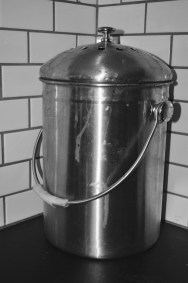
My interest in compost started a little over two years ago when my husband and I first became homeowners. In an attempt to cut down on waste and add more nutrients to the garden, we began putting food scraps in a compost bin. Eventually, we obtained a stainless steel container  for the counter, and a larger backyard composter.

DSC_0946I no longer trash the carrot peels, tomatoes stems and potato skins. I put them in the compost, knowing that after they spend ample time decomposing, they become fertilizer for next years crops. It’s much easier to toss them if I know they are still serving a purpose.
The concept of compost makes it easier to be ruthless when editing. I never have to delete anything for good. If a line doesn’t work or is unnecessary for a story, I cut and paste it to a compost file (currently titled “The land of misfit lines”). The line can rest while my mind decomposes it, breaks it down to the most basic form of ideas, so that one day, when I am working on a different piece, it can add life and vitality to it.

Furthermore, I’m a big fan of “save as.” After I finish a first draft, I let the story sit for a day or two. When I’m ready to begin draft two, I save it as a new document. If I don’t put all the cut words  into the compost, I know the originals are saved. This also allows me to track my writing process and see how the story evolved from draft to draft. Its light years more efficient that fighting to find a use or justification for every unnecessary line in the piece delivered it.

In graduate school, I hated to cut anything out of my papers. I’d waste hours finding a way to make a line work; I’d add extra paragraphs to an essay that was already over ten pages just so I wouldn’t have to cut one line. When I was tutoring, if a student brought me an essay that just didn’t work, I’d do everything I could to help the salvage as many words as possible. Both me and my students would do okay, but the writing wasn’t our best.

Now, whether I am editing my own writing or helping a student, if something isn’t working, it goes in the compost. The result is that both me and my students write better. Each word is heavy with meaning. The organization is easier to follow. There is no fluff.

The concept of compost can also help me let go of ideas in the non-writing side of life. I know that if I try something, whether it be at home or in the classroom, and it just doesn’t work, that I can put it in the compost. I’m not saying no forever or completely ruling it out. I’m putting it aside where it can get deconstructed and become a basis or fuel for future ideas, making them greener and more productive.

I’ve learned how to avoid cramming so many ideas in one paper that no one reader can deconstruct it. I’ve learned how to let go of methods that just don’t work. Now, if I could only find a way to apply this concept to the ancient pieces of jewelry, notebooks of math homework, and dented keepsake boxes I just can’t seem to part with, both my first and second floor could appear simultaneously clean.

DSC_0628