Like Birds is on Wattpad.

Copy of Like BirdsWattpad has fascinated me and scared me since I started getting serious about my writing. Even before I knew what it was, I liked the idea of serially posting a story online. The problem was, traditional publishing just holds too much allure.

Now that I have one book signed with a small press and another being subbed to agents, it’s safe to pull Like Birds Under The City Sky from my “shelf” of misfit manuscripts and share it with the internet.

It’s a story near and dear to my heart, one that explores the intersection of the LGBTQ identities and Christianity, but it is not a linear novel. It jumps time and tenses and points of view as Micah tries to reconcile his faith with his identity, and explores the hypocrisy of his parents while helping his boyfriend, Charlie, run from cyber spies and robots who want to pressgang him into service.

Every time I try to rein that jumping around in per beta reader feedback, it just doesn’t work. I still have two stories trying to be one. I still have a story that unfolds out of order.

And that is just how it has to be.

In my last revision, I tried to blend the feedback with want I want the book to be. I changed the format so it was told through blog posts, letters, journals and transcribed recordings.

Books like this do exist in print, but for now, I think this one is just better online. Readers don’t have to go through it in my recommended order, and don’t necessarily have to read the whole thing. Someone more interested in the realism of it can just read the parts set in Micah and Charlie’s past, and those who are more into the science fiction could just read about their present. Someone could read them in the order I’m posting them — the order I see the story unfold in, or read the chronologically.

Once the whole book is on Wattpad, I’ll post a few guides giving people navigation options, but those who read it while I’m posting it will see it in the order I do.

I considered building a website to post it on, but decided Wattpad would work fine since it is free, has readers, and an established community. I still have a lot to learn about Wattpad, but I’ll work through that as I go, and hopefully, once I get a chance to participate, I’ll get feedback from the community.

The first three sections are up now, and I plan to post one or two a week over the summer until they are all online.

This will be an interesting experiment, and I hope the right readers do find this story.

If nothing else, I’m sure I’ll learn something from it, and like I did with my failed attempt at crowdfunding a book, I’ll blog about those lessons as I learn them.

Since there is no money involved in this summer’s experiment, I suspect it will turn out better than my foray into Publishizer did.

https://embed.wattpad.com/story/148624059

Twitter Pitch Parties Are About More Than Just The Likes

When seeking an agent or publisher for a novel, I participate in every twitter pitch party I get the chance to. So far, no one “like” or “heart” has landed me an agent or a book deal, but I still participate. They help me figure out what agents like the kind of stories I write, and it also helps me network with like-minded writers.

Events like #DVpit, #pitmad, #pitdark, #kidpit, #IWSGPit, #pit2pub, and a few others that I may be forgetting offer writers a chance to connect with the right agents and editors. However, you don’t necessarily need your pitch to get liked for that to happen.

This year, I used #DVpit as a deadline to finish editing my latest novel. I got my manuscript and query in good shape, but didn’t have as much time as I would’ve liked to perfect my pitches. I tweeted them anyway, and tried not to refresh twitter every three seconds.

I didn’t get a single agent like, but that night, I still sent out my first volley of 11 queries, and within two weeks, two of them turned into partial requests.

The agents may not have liked my tweet, but I saw the kinds of tweets they did like. I searched the feed using hashtags that were in my pitches.

For example, I searched #DVpit #YA #F #LGBT. I made a list of agents requesting those projects. Then I did the same search without the #LGBT and added those agents to my list. If reviewed their guidelines, and if I wasn’t familiar with them from my first three attempts to get an agent, I looked them up on Absolute Write.

I ended up with a long list of agents, and picked ten who didn’t require a full synopsis (because I hated and still hate my synopsis). After getting two requests and about 5 rejections from that first batch, I sent out another. Some of them were agents from my #DVpit list, some were agents I’d queried in the past, and others came from a #MSWL search.

In total, I’ve gotten 3 requests (1 full, 2 partials) and 11 rejections. I’m still waiting for a response on 10 more queries.

Those odds are not bad considering I didn’t get any likes.

With my other three manuscripts, I received lots of likes for pitches, some that evolved into requests, but none of them turned into an offer. However, one of these did indirectly lead me to NineStar Press, the publisher who I signed with for Power Surge.

NineStar didn’t like any of my pitches for Power Surge, but they did like a pitch for a different book. I queried them, and ultimately got an R & R. I still haven’t revised that manuscript, but I did send NineStar a dark fantasy novelette called Half-Breads, which they published as part of their Halloween story, an urban Snow White retelling they accepted for Once Upon a Rainbow 2, and Power Surge, the novel that is nearest and dearest to my heart, and rejected by over 100 agents.

Had they not liked my #DVpit tweet for the other book, I might not have known they existed. And that would’ve been said, because some of the best book’s I’ve read this year were ARC’s I reviewed for them. Through NineStar, I’ve also connected with an amazing community of writers who have helped me boosted my confidence, hone my craft, and even feel more comfortable with my gender identity. Words can’t express how grateful I am to have found them.

In general, I’ve also built my twitter network though pitch contests. If someone’s pitch sounds really cool, I follow them. Sometimes, nothing comes of it. Other times, they and I engage with each other’s tweets, encouraging each other, offering advice, and boosting posts. Some even become beta readers or cp’s.

Getting agent likes are a big part of pitch contests, but they are not the whole story. If you have an eligible manuscript, pitch it on twitter, follow the feed, and think of it as a way to engage with a community. Think of these contests as opportunities to learn and network, and look at the potential for agent requests as a bonus. Celebrate when you get them, but don’t be discouraged if you don’t.

P.S. If you write dark fiction check out #pitdark, which is happening tomorrow. #PitMad is June 7th, so put that one on your calendar and polish your pitches.


Review Lost Boy: The True Story of Captain Hook by Christina Henry

Lost Boy: The True Story of Captain HookLost Boy: The True Story of Captain Hook by Christina Henry

My rating: 5 of 5 stars

I read this book in a day — a few hours in the morning and a few in the afternoon. It was an escape from the stress of finals week during a lull in the grading. It was a great read — much better than Henry’s Alice books. While those were horror, this was more dark fantasy. Peter almost reminded me of one of Holly Black’s faeries: cruel, failing to understand love, and not quite aware of the havok his selfishness wrecks.

I’ve read a few different Peter Pan retellings, and this one was definitely my favorite. Part origin story, part coming of age narrative, Lost Boy told the story of how Captain Hook came to never land, learned to see through Peter’s shallow lies, learn what it really means to love and to hate.

There was conflict, emotion, and a neverland finally as fey as I’d always imagined it.

This was the kind of story where I knew what the end was going to be before I started reading, but the fun was in figuring out how Jamie became Captain Hook, how he grew from being a lost boy to a cursed “pirate.”

It may not be the happiest story ever, but there was truth in it. There was a compelling voice and an antihero I could root for.

I recommend this to anyone who likes the flavor of dark that shows up in Holly Black’s books, but craves a more “adult” narrator and can do without the angsty teen romance.

View all my reviews

Fantasy a No Go with This Years Students

Back in January, you may have seen my post about using novels instead of textbooks for my ENG101 and RWR090 classes. Two of the novels worked out okay, but one was a disaster.

Feed by M. T. Anderson

This semester’s 101 students weren’t as enthusiastic about Feed as last semesters, but after a rocky start, they did get into the book. The romance plot hooked them. They engaged with the book when characters made bad choices. Most importantly, it made them think. They saw clear connections between the book, the articles we read, and the TED talks we watched.

When it came time to write essays, they dug into topics like consumerism, dependence on technology, and social media. They succeeded at finding ways to narrow those things down, and while some struggled to balance all the different sources, most of them did assert and support an interesting thesis.

For now, I’ll continue to use Feed.

Shadowshaper by Daniel José Older

As much as I love this book, using it in class was a nightmare. I had thought that my students would like it because they could “see themselves” on the page and use things like the snippets of Spanish dialogue and description of familiar food to connect to the book. This backfired. I was being stupid, letting my white, middle class privilege influence my thoughts.

Yes, some students did like the descriptions of Caribbean food and connected to the relationships the characters had to their family members. Some of them had even lived in the neighborhood the story was set in. It helped a little, but mostly, they were indifferent to it or bored.

The supernatural elements were what tipped them over the edge. The idea of characters controlling and summoning spirits disturbed them. Some couldn’t understand the magic system but more found it to be too real. At least one or two students believed in spirits. One said their pastor told them not to read it, because that kind of thing “opened doors” for bad spirits to come in. Another said a friends aunt claimed to be able to control spirits and use magic to bring people good or bad luck.

The combination of being bored with the setting, disturbed by the magic, and annoyed by the main character meant they complained about the book non-stop. It didn’t help that I was out with a concussion for a good part of that unit.

When it came time to write, they trudged through a character analysis, wrote reviews for extra credit, and celebrated when it was over.

Love, Hate, and Other Filters by Samira Ahmed

This is a book I will again for RWR090. My students did seem to enjoy it and learn a lot from it. They could relate to the experience to some of the experiences the main character had balancing American culture with her parent’s culture and loved learning about Indian and Muslim culture.

Their essays were thoughtful explorations of concepts that came up in the book, and with no small amount of hard work, they found articles about those concepts and connected them to the book.

I admit I didn’t do nearly as much with it as I should’ve. I feel like I barely scratched the surface of it, and there is tons of untapped potential to explore in a new semester with a new group of students. I think I was a little drained or burn out from the rougher portions of the semester. However, with time to reflect on and examine what I did and didn’t do, I can make much better use of it next time.

Comments?

I’m interested to hear if any one else has used novels in a first year writing course – one that isn’t specifically geared towards literature. What did you use? How did it go? Will you do it again? Why or why not?


Writer Beware: Your Work Is Valuable; Don’t Get Scammed

Most of us start writing because we enjoy it or because we have something we are desperate to share. While some writers hoard their work, afraid to let the public see it, many want or even need their work to be read. Those of us who want to publish aren’t always content to just throw our work on our website or someone else’s. We want to see our stories officially published in some kind of book, journal, or magazine. However, we need to be smart about it and not fall victim to scammers and predators who are out to take advantage of us.

Publishing isn’t easy. It’s slow and painful. To be successful, writers need to be able to stand up against an onslaught of rejection and push through it until a piece gets accepted, and then start the process all over again. It’s easy to feel defeated, like your writing is bad and doesn’t hold much value.

No matter how many rejections you get, your writing is valuable. Rejections don’t mean you’re a bad writer. Every writer has room for improvement, but no one should judge their writing based on rejections. Feedback from beta readers, critique groups, and workshops can help you identify your strengths and the skills you need to work on. Reading craft books and published stories are also tools for identifying weak areas and improving them.

Still, not getting published and not getting paid is frustrating, especially when the markets with the highest rates and largest reach are the hardest to get into. I can consistently get $5 or $10 for a piece of flash fiction, and have had a few pieces sell for over $100, but I have yet to break into award winning markets, pro-paying markets, let alone gotten to the point in my career where editors are soliciting stories from me.

Solicited submissions are some kind of a dream for me. How cool would it be for an editor to be familiar enough with my writing to ask me to write a story for their publication?

Technically, this has happened twice. The first time was from a woman in my twitter network who starting up her own online magazine, Speculative 66. Like the name implies, it features speculative stories that are only 66 words long. It did pay, but the stories were free, and writing the story was a fun challenge.

The second was from a scammer dressed up publisher. Earlier this week, I got an email from an editor at Z Publishing. This person claimed to have looked at my website, and thought I would be a good fit for the Massachusetts edition of an emerging writers collection. I was excited for about five seconds, but then I realized I had never heard of this publisher, and my scam alarms blared.

I googled them, read a blog about them, and a post on Absolute Write. After that, I went to their website to verify what I read about them.

Here’s the scoop. The put a high volume of anthologies, and according to the blog I read about them, they accept almost everything. This I didn’t verify myself.

Their anthologies come out in both print and electronically, and are sold both on their website and on amazon. Their contract says there is no payment and no royalties. However, if authors join their affiliate program, they can make some money.

Here is how it works: Authors are given a link to the publisher’s website. If an author sells books through the link, they get 25% of the sale and the other authors get nothing. 100% of the money sales made on amazon or through the website that aren’t connected to an author link goes to the publisher.

I n theory, if an author had a big network of family and friends who were going to buy the book, they could make money off of it while the other authors get nothing. The publisher has the chance to make money off of the amazon sales while sharing nothing with the author. If an author has a big of a network to profit from this model, they could make at least double by self-publishing a collection of their own work.

The website makes it sound like some new, revolutionary publishing model, but really, it is a scam that preys off of desperate and naïve authors.

If you are going to give your writing away, send it to a place that doesn’t charge people to read it. And if you want to make money, then submit to more ethical, paying markets whether they are anthologies or magazines. Keep writing and keep sending them stuff until you finally get in.

If you wind up with a dozen stories that have been rejected by the big paying markets? No big deal. You can self publish it and keep a lot more than 25%.

Do be careful where you submit to. Find market’s whose goals align with yours. If I’m going to publish in an anthology with out an advance, I know I’m taking a risk. However, if the publisher has competent editors, a good cover artist, a marketing plan, and a fair contract, I’ll consider it, though it isn’t my first choice.

If you want an example of a small anthology publisher who did things right, check out B Cubed Press’ Alternative Truths.

Remember, your writing is valuable.  Don’t rejections tell you otherwise. Don’t let scammers profit from your work while you get nothing.

How an editor made my day.

This year, I had high hopes for #DVpit. I’d just finished polishing a new manuscript. My query was in good shape. I’d struggled with my pitches, but thought I finally had them down. I scheduled them, went to work, and tried to not to sneak peeks at twitter between each student I tutored.

My try was feeble and I checked the internet every chance I got. What did I find?

No agent <3’s from #DVpit.

Short story rejections, including one I had been a little too optimistic about.

It wasn’t even lunch time, and I was miserable.

At some point in in the midst of it all, I opened up a 100-word-story I’d  been working on for a while. I made a few changes based on some feedback and sent it off to an anthology — one that was going to consist entirely of dark drabbles.

Within an hour, I got a response. I read, “I have enjoyed your work to date,” and froze.

Did an editor just recognize my name? I did a little “happy dance” at my desk, which really is just me smiling and bouncing in my seat. My fellow tutor was with a student, so she didn’t notice.

I relished in that thought for a few seconds before reading on to find that not only had I previously published in the same venue as this editor, but he had read my work in another magazine.

I paused again, afraid that despite actually knowing my name, he was still going to reject my story.

Thankfully, he didn’t. He suggested some edits, which I promptly made. The story was accepted, and will be included in Drabbledark along with some of my favorite short story authors.

#DVpit may have been a bust, but knowing that someone who I’ve never met in person new me by my stories was an amazing feeling. Even if it had turned into a rejection, I wouldn’t have cared. As a newish writer, being recognized is a huge victory.

As a writer, take every little victory you get, no matter how small. When you are being battered down by rejections, let that victory be the tiny candle that light up your darkness. As a reader, engage with writers, especially the ones who are just starting out. Tell them when you like their stories. Let them know that you know they exist.

A single sentence can make or break someone’s day.


2nd edition of Teach. Write. is here — Hey, Mrs. Winkler!

The Spring 2018 edition of Teach. Write. is now available. Read for free online or buy a print copy here. Submissions will open for the Fall/Winter 2018 edition on May 1 and close on August 1. Please see the submission guidelines for more information.

via 2nd edition of Teach. Write. is here — Hey, Mrs. Winkler!

Concussive Puppy Trouble

DSC_0019This is the longest I have gone without making a new post since I started this blog, and it might be a while before I get back to my regular posts, so I figured I’d hop on for a few minutes and let you all know what is going on.
Late January was the start of a new semester, once where I was teaching 12 credits instead of the nine I’d done the previous fall and spring. That included a six-credit section of Reading, Writing and Reasoning, a course I have only taught once before.

The extra prep work was making it harder to keep up with my writing, and the amount of WIP’s in need to editing or revising resulted in me hopping from project to project in the time I could steal away to write.

IMG_0007.JPG
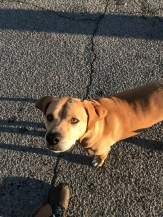
The dog next door.

Neighbors, both friendly and stupid, weren’t helping. The woman who moved in next door to me in the fall is amazing, and I love having someone I can connect with in my neighborhood. However, socializing while our dogs play is time I am not writing.


DSC_0020
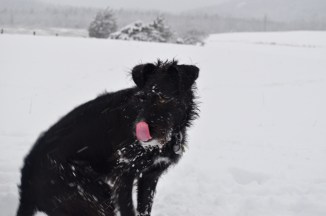
My pup, Tavi.

Another, less friendly neighbor that I don’t really know, made the doggie play dates with the nice neighbor even more time consuming. He has this outdoor fish pond is filled with large, orange fish. Which was fine, until the water heater broke during a cold spell. When the fish died and froze, the dogs discovered them, and no matter how much I practiced recall with Tavi, he and his partner-in-crime couldn’t resist sneaking over to munch of frozen fish.


Then came a messy Nor’Easter. Alternating layers of ice and snow coated the ground. The community college I teach at closed early, and when I got home I let Tavi out to play in the snow. We played fetch and worked on commands like sit, stay, and come, giving me a chance to decompress from the stressful drive before diving into my backlog of grading.

Just as I was getting ready to head inside, Tavi bolted for the fish. I knew that when he put his nose down and ran full speed, his little mind only had room for one thought: get the fish.

I did the one thing trainers say not to do when a dog runs away. I chased after him. Determined to catch him before he reached the fish, I didn’t realize I had crossed from the beach to the lake.

At a full sprint, my feet flew out from under me. My head smacked solid lake ice. I yelled a few bad words. Everything went black. Tavi was standing over me, staring with his amber eyes. I grabbed his leash, stormed in the house, and with only a few breaks, one that involved yelling at someone who was driving a truck on the ice, I graded until 10 p.m.

I didn’t know anything was wrong until it was time to go to bed and I didn’t know where my phone was. After tearing the house apart, I realized couldn’t remember what order anything happened in. I literally had to message people to find out when I talked to them and make a timeline. ‘

The next morning, I had a killer migraine. I called out of work and before lunch time, I was at the doctors, and they were telling me I needed to rest my brain, and to avoid reading and screens so my brain heal. I even had to limit handwriting.

IMG_0519.jpg
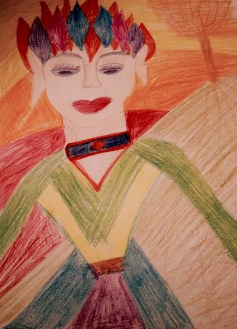
There are plenty of first graders who draw better than me, but it was the only way I could focus on audio books.

Two weeks without doing things that seem as necessary as breathing was hell. Thanks to sensory processing disorder, audio are usually more of a struggle than they are worth, but I was so desperate for stories that I found a way to focus on them: drawing. However, audio books and me are a completely different post.


Let’s just say that after being out of work for two weeks (I had subs cover my classes) I had a boatload of grading to catch up on, and it was mid-march by the time I really got back to the amount of writing I am used to. I’ve had to put a few projects on the back burner, but I’m still hopeful that novel #4 will be ready to pitch when #DVpit comes along.

My life finally seems to be getting back on track, so hopefully, I’ll be back to my usual writing related posts, book reviews, and even a few teaching-related pieces.


Replacing Textbooks With novels in First Year Writing

For the past five years, I’ve taught first year writing at community college and state universities. I assigned textbooks and/or trade books based on what other teachers used or what seemed like the kind of book college students should read. It didn’t work out so well. Now, I’m using books I get excited about.

The first books I recall assigning were writing textbooks like Curious Researcher or Axelrod & Cooper’s Concise Guide to Writing. While these contain good information about writing and some useful exercises, they didn’t engage students. Half the students didn’t even bother reading, and the ones who did complained the book wasn’t worth the $50 or $60 they paid for it. 

As I got more experienced, I realized that most of the material in the textbooks could be conveyed through discussions about writing and having students reflect on their own writing and/or other people’s writing.

I stopped making students buy expensive textbooks and started assigning one or two trade books. Additionally, students would read assortment of articles they could access for free online or through the library’s databases. This works well for a lot of teachers.

While I did manage to find a handful or articles and essays that engaged my students, I couldn’t seem to find a book they liked.

The Mind at Work by Mike Rose held their attention for one chapter. The Boy Who Harnessed the Wind by William Kamkwamba was a neat concept, but they got bored with the amount of detail in the story. They liked some of the “facts” in Modified by Caitlin Shetterly, but were easily confused and claimed she kept getting “off topic” and wound up hating the book. They claimed Dwellings by Linda Hogan only needed to be a few pages because it repeated the same message over and over again.

The first book I assigned that more than one student seemed to enjoy was Feed by M. T. Anderson—a novel.

It took a while, but I finally figured out what my problem was: I really don’t enjoy reading book length non-fiction. I know it is sometimes necessary, and that a lot can be learned from it, but it always feels like work.

I don’t get excited about it, and that is a huge problem.

Students have very sharp bullshit detectors, so they know when I’m faking it. If I’m not excited about the book, why should they get excited about it?

Feed was the first novel I asked students to read. It also happened to be dystopian, YA, and science fiction – a combination of genres I love.

Because I was so excited about it when I introduced it, they gave it chance. Because they gave it chance, many of them got pulled into the story and enjoyed it. A few loved it. One student told me it made him want to start reading novels again.

Sure there were a few who didn’t like it, but since books are so subjective, that is to be expected. Enough liked it. And enough wrote thoughtful, sourced based papers because of it.

I’ve learned my lesson. Unless the department requires it, I won’t teach a book I am not passionate about. And novel’s can get students thinking just as much as non-fiction, and the questions those novel’s raise can prompt students to do research for essays.

So this semester, I am using novels all around. Comp 1 is reading Feed again and writing a sourced based paper about the issues the novel raises. My reading class is going to read Love, Hate and Other Filters as well as Shadowshaper.

I’m still working out the details of the assignments, but I am confident these books will go over better if I can express my confidence and excitement when introducing them to the students.

I’ll post something later in the semester about how it worked out.

Another Book Review: Shadowshaper

Shadowshaper (Shadowshaper, #1)Shadowshaper by Daniel José Older

My rating: 5 of 5 stars

Daniel José Older’s Shadowshaper series has been in my TBR list for a while. I bought it a few weeks ago, but had to work through the ARC’s I had to review before I got to it. I don’t know why I waited so long to read this. It is amazing, and I am going to try really hard pinpoint what I loved about it without just saying it was awesome.

At first, the book seemed to play into the classic YA urban fantasy trope of teen finds out they are part of some supernatural world, but this book was so much more than that.

Yes, Sierra Santiago, spunky Puerto Rican protagonist, did get drawn into a supernatural world her family had hid from her, but her personality, and her friends, were enough to make the story unique. Of course, Older didn’t just leave it at that. Sierra has a powerful internal struggle against racism and expectations. While she struggles against terrifying enemies, she also has to learn to love herself for who she is — to embrace her culture and identity.

This is all painted in colorful detail against the backdrop of a diverse, alive, sensual Brooklyn, where gentrification and hipsters are creeping up on old school neighborhoods where old men play dominos in vacant lots.

Hailing from different parts of the Caribbean, the supporting characters, including a lesbian couple, added more flavor to cultural melting pot this story happens in.

Not only did I enjoy this story, but I learned from it. I was reminded of somethings that should be obvious but aren’t always. I’m “white” and sometimes we (me and other white people) stupidly tend lump “people of color” into a few categories, and/or don’t always think about how someone who might be Puerto Rican, like Sierra’s aunt, might be a bigot towards someone who was Haitian and “darker.” It reminded me of how one time, I overheard a Dominican student whisper, “I thought that kid was black, not Dominican” to one of their friends as class was ending.

Books like this one, are so important for so many reasons. They represent a groups neglected in literature, allowing more people to see their people on the page. They are also a way educate people who are culturally illiterate or blinded by whiteness. By saying this last thing, I worry even that I am taking value away from this book by partially making it “for white people.”
I always worry I am going to overstep my place when talking about race and other people’s cultures, but being silent only fuels oppression.

Anyway, culture and race issues aside, this is an awesome book. The plot, while a little formulaic, engaged me, the magic concept was unique and the characters were deep. So if you like YA urban fantasy, books like Mortal Instruments, Chronicles of Nick, and Tithe, read this book, because it is even better than those.

View all my reviews